

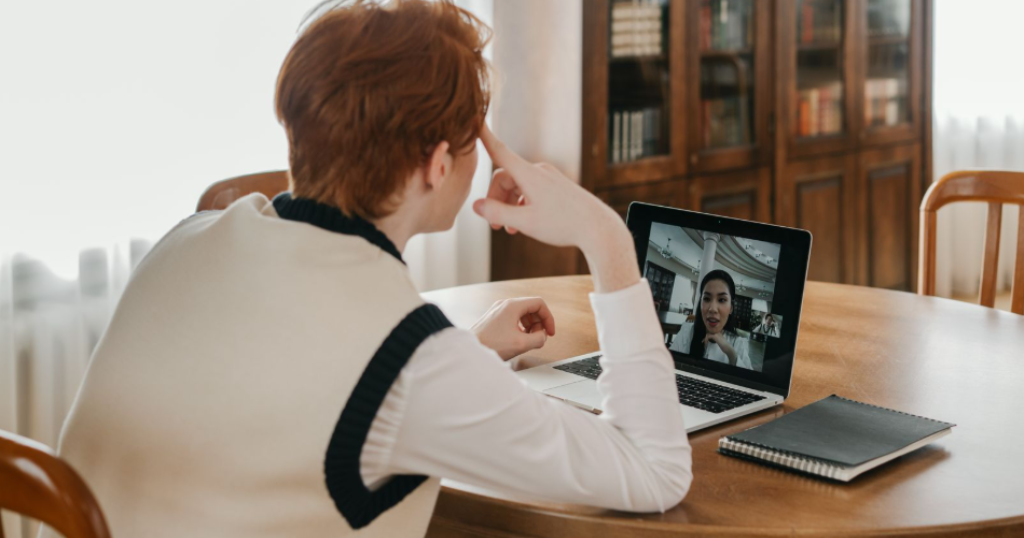
Does Telehealth Therapy Work as Well as In-Person Sessions for Treating Anxiety?
You finally typed “therapist for anxiety near me” into a search bar. Now you’re looking at a mix of options: some therapists see clients in person, some offer video sessions, and many do both. And a new question pops up. If you meet with a therapist through a screen, is it really as effective as sitting in the same room?
It’s a fair question, especially when anxiety is already making every decision feel bigger than it should. Here’s what the research says, where it has limits, and how to choose the format that will actually work for you.
The Short Answer: Research Says Telehealth Holds Up
For most people with anxiety, video therapy appears to work about as well as in-person sessions.
A 2024 systematic review and meta-analysis in the Cognitive Behaviour Therapist looked at 30 studies of cognitive behavioral therapy (CBT) delivered by video call for common mental health conditions, including anxiety, panic, and depression. Among the 12 studies that compared video and in-person CBT directly, the difference in symptom improvement was not significant. The authors concluded that video calls could increase access to CBT without diminishing effectiveness.
Other research points the same way. A randomized controlled trial of adults with mood and anxiety disorders compared 12 sessions of CBT in person versus by videoconference with the same therapist. Both groups improved, with no significant differences in symptoms, quality of life, or how strong the relationship with the therapist felt.
The National Institute of Mental Health also notes that psychotherapy for generalized anxiety disorder “can be effective when delivered in person or virtually via telehealth,” and calls CBT the “gold standard” psychotherapy for GAD.
You’d also be far from alone. According to SAMHSA’s 2025 National Survey on Drug Use and Health, 12.3% of U.S. adults, about 32.6 million people, received mental health treatment through telehealth in the past year.
The Fine Print: What the Research Doesn’t Say
“About as effective on average” isn’t the same as “identical for everyone,” and good research is honest about that.
A 2022 study in The Canadian Journal of Psychiatry compared group CBT for anxiety and related disorders delivered face-to-face versus by videoconference to more than 400 adults. In-person groups showed only a slight advantage overall, and the only significant difference was in groups for generalized anxiety disorder, where the effect was small. Video groups, on the other hand, tended to have slightly higher attendance in some cases. The authors called video group CBT a promising and effective alternative while noting that more research is needed.
Researchers have also pointed out that the quality of telehealth studies varies. As psychologist Ashley Batastini told the American Psychological Association after her team’s meta-analysis found similar outcomes for virtual and in-person care, the field still needs “a better understanding of what works and for whom.”
The takeaway: format matters less than many people fear, but it can still matter for you personally.
When Telehealth Might Be the Better Fit
Video sessions can make therapy easier to start and easier to keep up with. They can be a good choice if:
- Your schedule is packed. Skipping the drive can make it much easier to fit a session into a workday. Our post on anxiety care for high-achieving professionals talks more about fitting treatment into a demanding life.
- Consistency is your biggest hurdle. Showing up regularly matters, and some people find it easier to keep appointments from home.
- Walking into a new office feels like too much right now. For some people, starting from a familiar space lowers the barrier enough to begin.
- Your anxiety shows up at home. Working on worry, panic, or racing thoughts in the place where they actually happen can make new skills feel practical right away.
When In-Person Sessions Might Serve You Better
In-person therapy may be the better choice if:
- You don’t have a private space or reliable internet. Batastini noted that virtual care can be harder for people without these basics. Constantly worrying about being overheard makes it tough to open up.
- Avoidance is a big part of your anxiety. If staying home has become a way to avoid fear, coming into the office may become part of the work itself. That’s a good thing to talk through with your therapist.
- You feel more present face to face. Some people find video calls draining or distracting. If you notice you’re checking out on screen, that’s worth paying attention to.
- You’d like the clear separation of a dedicated space. Leaving home, stepping into an office, and then heading back out can help some people shift in and out of therapy mode.
Many people use both. You might start in person to build the relationship, then switch to video during busy seasons, or the other way around.
If you’re ever in crisis or thinking about harming yourself, don’t wait for your next session. Call or text the 988 Suicide & Crisis Lifeline, or call 911 if you’re in immediate danger.
What Matters More Than the Format
Whether you’re on a couch at home or in an office chair, a few things tend to make the biggest difference:
- An evidence-based approach. CBT is one of the most well-supported treatments for anxiety. If you’re not sure which approach fits you, our guide to finding the best therapy modality can help.
- The right therapist. Ask about a therapist’s training, their approach, and how often they work with concerns like yours. A good fit matters in any format.
- Showing up consistently. Regular sessions help skills stick, so choose the format you can realistically keep up with.
- Knowing what to expect. If nerves about the first appointment are holding you back, read what happens in your first therapy session.
Not sure if what you’re feeling is anxiety? Our post on subtle anxiety symptoms covers the less obvious signs, like muscle tension, irritability, and trouble sleeping.
Tips for Getting the Most Out of Telehealth Therapy
If you choose video sessions, a little setup goes a long way:
- Find a private spot. A closed room works best. Some people take sessions from a parked car.
- Use headphones. They improve sound and help keep your conversation private.
- Test your tech early. Check your camera, microphone, and connection before your first session.
- Treat it like an appointment. Close other tabs, silence notifications, and give yourself a few minutes before and after.
- Know where you’ll be. Telehealth providers must be licensed in the state where the client is located, according to the U.S. Department of Health and Human Services. If you’ll be traveling during a scheduled session, let your therapist know ahead of time.
Looking for a Therapist for Anxiety Near Me? Start at re:Vive Counseling.
At re:Vive Counseling, you can choose what fits your life. We see clients in person at our office at 12351 W 96th Terrace, Suite 108, in Lenexa, and we offer secure telehealth sessions for clients throughout Kansas. We work with clients from across the Kansas City metro, including Overland Park, Olathe, and the rest of Johnson County.
Our therapists use evidence-based approaches like CBT and mindfulness to help you manage anxious thoughts and feel more in control. Faith-integrated counseling is available for those who want it, but it’s never required. Learn more about our individual therapy for anxiety and depression, or meet our clinicians to find someone who feels like a good fit. Each clinician manages their own schedule, and some offer evening or weekend availability.
Questions about fees, scheduling, or payment? Our FAQ page covers the details. When you’re ready, call 913-491-6876 (ext. 101), email info@revivekc.com, or contact us online. Whether you meet with us in Lenexa or from your living room, the right therapist for anxiety may be closer than you think.
Related Posts

The Importance of Practicing Gratitude
Hi Friends, Welcome to a new year, we are glad you are here! Pull up a chair...

Anxiety Treatment in Overland Park for High-Achieving Professionals
Regain Control of Anxiety Without Losing Your Edge High-achieving...
What a Smoke Detector Teaches Us About Anxiety
Smoke detectors exist to keep us safe. They are designed to detect the presence...

Your Teen Is Overwhelmed by Anxiety and Stress in Lenexa
When Your Teen’s Stress No Longer Feels “Normal” When a teen is under stress,...